
CPI inflation is on the decline since July.

Economic think-tank NCAER has revised its projections for economic growth to 7.9 per cent for 2006-07, compared to 7.7 per cent made in April due to likely higher growth in industry and services sectors.
Increasing prices of commodities, notably diesel and petrol, pushed up inflation to a 35-week high of 6.09 per cent in the first week of the fourth quarter this fiscal as compared to 3.78 per cent in the year-ago period.

While the farmers are not getting remunerative prices for their produce, at the same time they are forced to pay high prices for items they consume.
Inflation rose to 4.10 per cent for the week ended August 11, against 4.05 per cent in the previous week, mainly due to higher prices of fruits and vegetables, bajra, masoor, gram and some manufactured goods.

RBI Governor Raghuram Rajan will announce the monetary policy on April 1 and expectations of a status quo are rising ever since the official data on consumer price inflation for February pointed to a cool down to 8.1 per cent.
Inflation fell for the tenth consecutive week to 5.01 per cent in the week ended February 5, touching the lowest level after the UPA came into power, due to cheaper vegetables, fruits and edible oils.

Inflation in onion continued to rule high at 42.22 per cent and in potato at 43.25 per cent.

Inflation, as measured on the Wholesale Price Index (WPI), has been in the negative zone since November 2014.
State Bank of India chairman A K Purwar said on Friday that interest rates will remain stable in the short term despite rising inflation, and may not remain soft in the medium and long term.

The WPI inflation stood at negative 2.4% in May 2015, compared with a negative 2.65% in April 2015.

Announcement of macroeconmic data such as industrial production and inflation, the US Federal Reserve's interest rate decision along with trends in global equities would dictate movement in the stock market this week, analysts said. Besides, foreign fund trading activity would also guide the trends in equities. "All eyes are now on the US Fed policy outcome for cues, which is scheduled on June 14. In the following sessions, the European Central Bank (ECB) and Bank of Japan (BoJ) will also announce their policy decisions.
Inflation for the month of August stood at 8.51 per cent, according to the new Wholesale Price Inflation (WPI) series.

Retail inflation measured by the consumer price index has risen sharply across food and non-food constituents, including services, keeping inflation expectations high, the Reserve Bank of India said in its Second Quarter Review of Monetary Policy 2013-14.

The broader markets ended in line with the benchmark indices- BSE Midcap and Smallcap indices ended higher by 1.3% and 0.9% each.

Inflation in pulses, vegetables and cereals was higher in Jan.

The inflation in vegetables remained stubborn, which jumped 16.91 per cent

The wholesale price-based inflation in February rose to 13.11 per cent on hardening of prices of crude oil and non-food items, even though food articles softened. After two months of mild easing, WPI inflation accelerated in February and remained in double digits for the 11th consecutive month, beginning April 2021. WPI inflation last month was 12.96 per cent, while in February last year, it was 4.83 per cent. The rise in crude oil and natural gas prices after the Russian invasion of Ukraine, beginning February 24, has put pressure on the wholesale price index, even though food articles saw softening across categories of vegetables to pulses to protein-rich items.

Wholesale fuel prices in May fell 10.51 per cent year-on-year.

Onions had the highest inflation rate among all major commodities.
Reversing its very short upward trend, inflation fell by 0.23 per cent to touch about two-year low of 4.10 per cent for the week ended June 18 even as food items and manufactured products become costlier.

Indian passenger vehicles market registered record wholesales of 43 lakh units in 2024, with companies like market leader Maruti Suzuki, Hyundai, Tata Motors, Toyota Kirloskar Motor, and Kia posting their best-ever annual domestic sales. The continued growth of SUVs, along with rural markets playing a key role in driving up car sales, helped the industry better the previous best of nearly 41.1 lakh units posted in 2023.
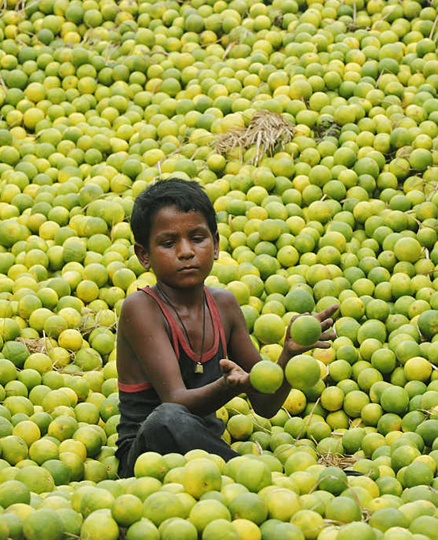
In October, CPI inflation was 5 per cent.

The government has exhausted only 39 per cent of its fiscal deficit target in the first half of FY24.
More rate cut by RBI unlikely this fiscal, say Ind-Ra

RBI targets to keep inflation at 4 per cent, (+/- 2 per cent), and its rise beyond this comfort zone will put pressure on the central bank to hike rates.

The cooking oil national industry body -- Solvent Extractors' Association (SEA) of India has suggested immediate initiation of government to government (G2G) dialogue with Indonesia on the proposed palm oil export ban from April 28 by them as it would have an adverse repercussions in India. Indonesia, which is the world's largest producer of palm oil and meets nearly 50 per cent of the total palm oil requirement in India annually, had announced to ban exports till further notice apparently to contain edible oil prices in their domestic market. "We have suggested our government initiate dialogue with Indonesian counterparts at the highest diplomatic level on the cooking oil export ban.
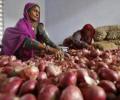
In case of onions, inflation skyrocketed to 127.04 per cent, while for the eggs, meat and fish segment the rate of price rise was 5.76 per cent.
.jpg)
Indian economy is seeing signs of upward momentum helped by gradual reduction of inflationary pressure though the country's growth still remains "relatively weak", according to Paris-based think tank OECD.

The Central bank primarily factors Consumer Price Index while deciding on policy rate.

India economy clocked a five-year high growth rate of 7.6 per cent in 2015-16.

According to the global financial services major, the Consumer Price Index based inflation is peaking off and is expected to be around 7.5-8 per cent in September.

Total debt for listed Indian companies excluding financials fell only 4 per cent to $368 billion in the year ended in March 2015.

India's manufacturing sector activity contracted for the third straight month in October amid falling levels of production and new orders, as the business climate within the country remained tough, an HSBC survey said on Friday.

Analysts remain selective on cement stocks amid the likely government's capex push ahead of the scheduled general elections in May 2024. While UBS has initiated coverage on the Indian cement sector with an anti-consensus negative view and suggests investors sell select cement stocks on a rally, those at Nomura remain selectively bullish on the sector and prefer companies with large brownfield optionality and multi-region presence. In the near-term, UBS expects strong earnings of cement companies in the next two quarters to be driven by robust demand and margin tailwinds, but suggests any sharp uptick in stock prices could offer a good opportunity for booking profits in the related counters.

The consumer price index has been in double digits for much of the past year, and was 9.8 per cent in September.
 © 2026 Rediff.com - Advertise with us - Disclaimer - Privacy Policy - Sitemap - Feedback - About us - Terms of use - Grievances